
Phulkari [2054-101]
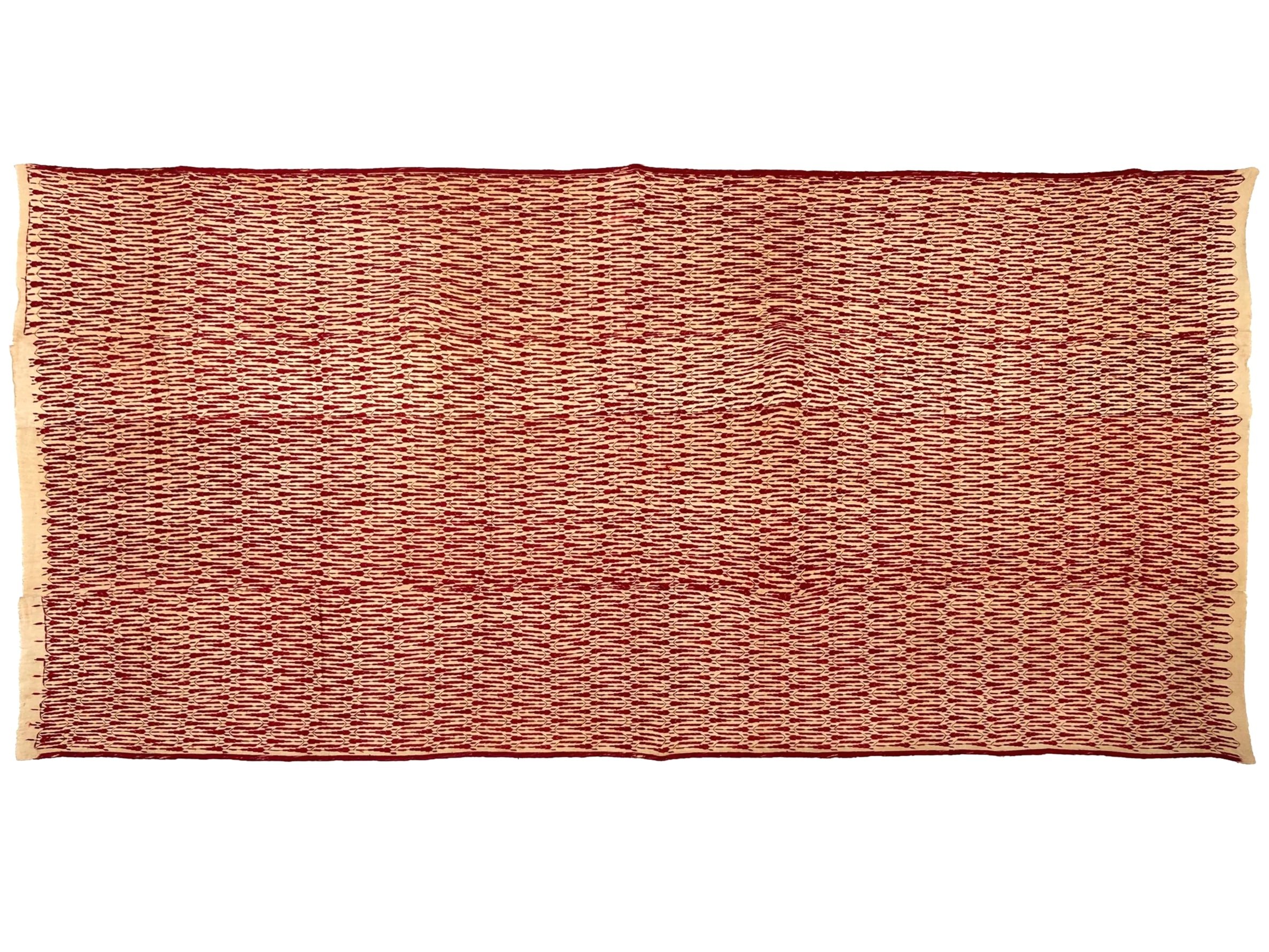
Phulkari [2054-101]
Khadi Cotton, Silk
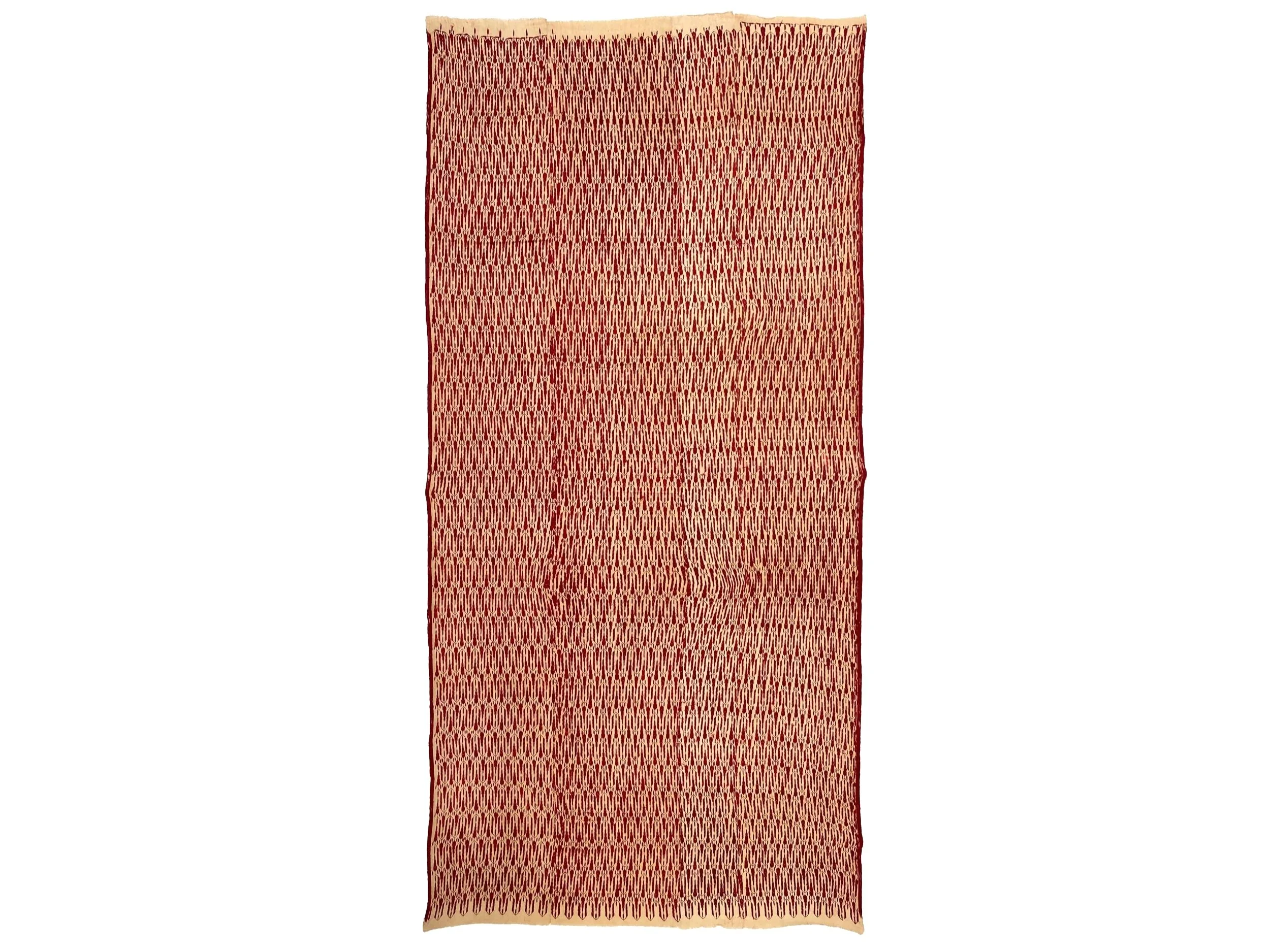
India/Pakistan, Punjab Province; c. early 1900’s
8′-10″ x 4′-1″ [2.7m x 1.25m]
condition: very good
. . . . . . . . .
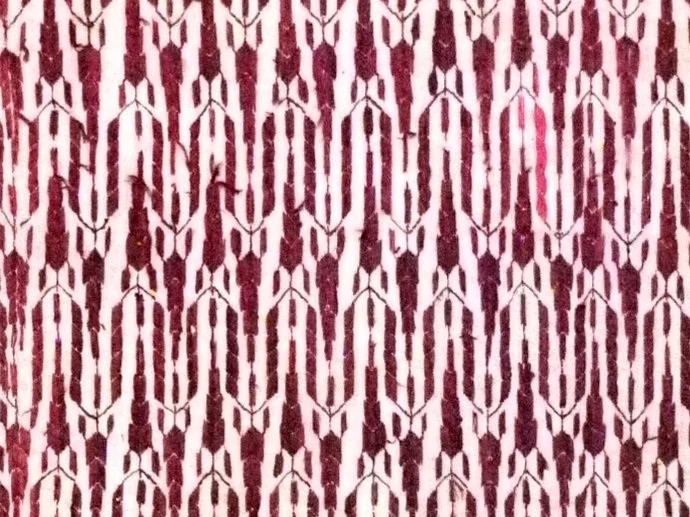
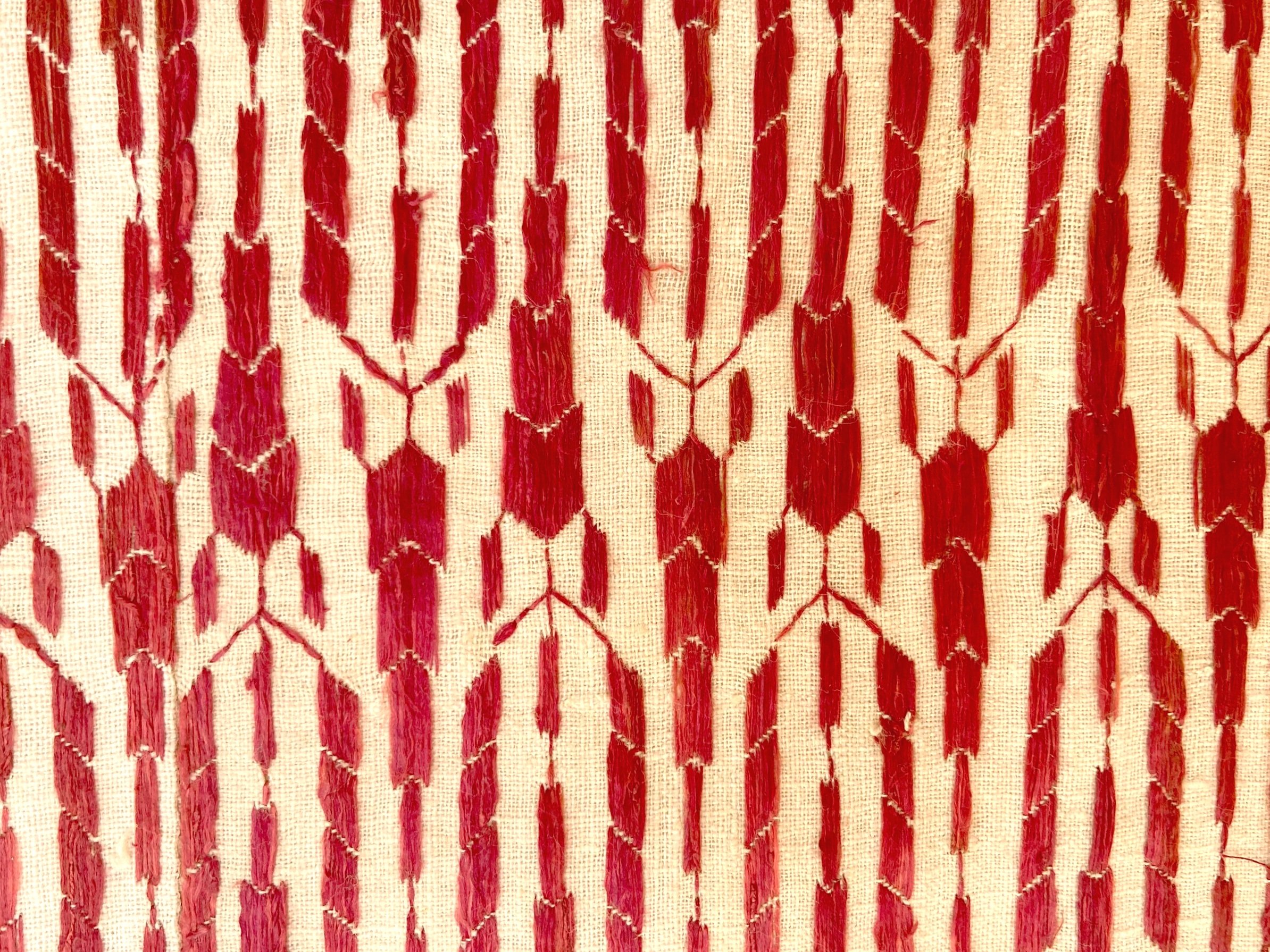
An extremely rare white base fabric ground Thirma Phulkari example. A field of intertwined, stylized vegetal forms runs across the piece, possibly echoing wheat or rice stalks. This is a simple yet charming textile, where the beauty emerges from its steady repetition of forms and the depth of the crimson embroidery. Subtle shifts in color appear in places, adding quiet variation. Imagine Agnes Martin turning to embroidery on her days off.
. . . . . . . . .
=> Allentown Art Museum PA 1996
=> Museum Collections: V&A London, …
. . . . . . . . .
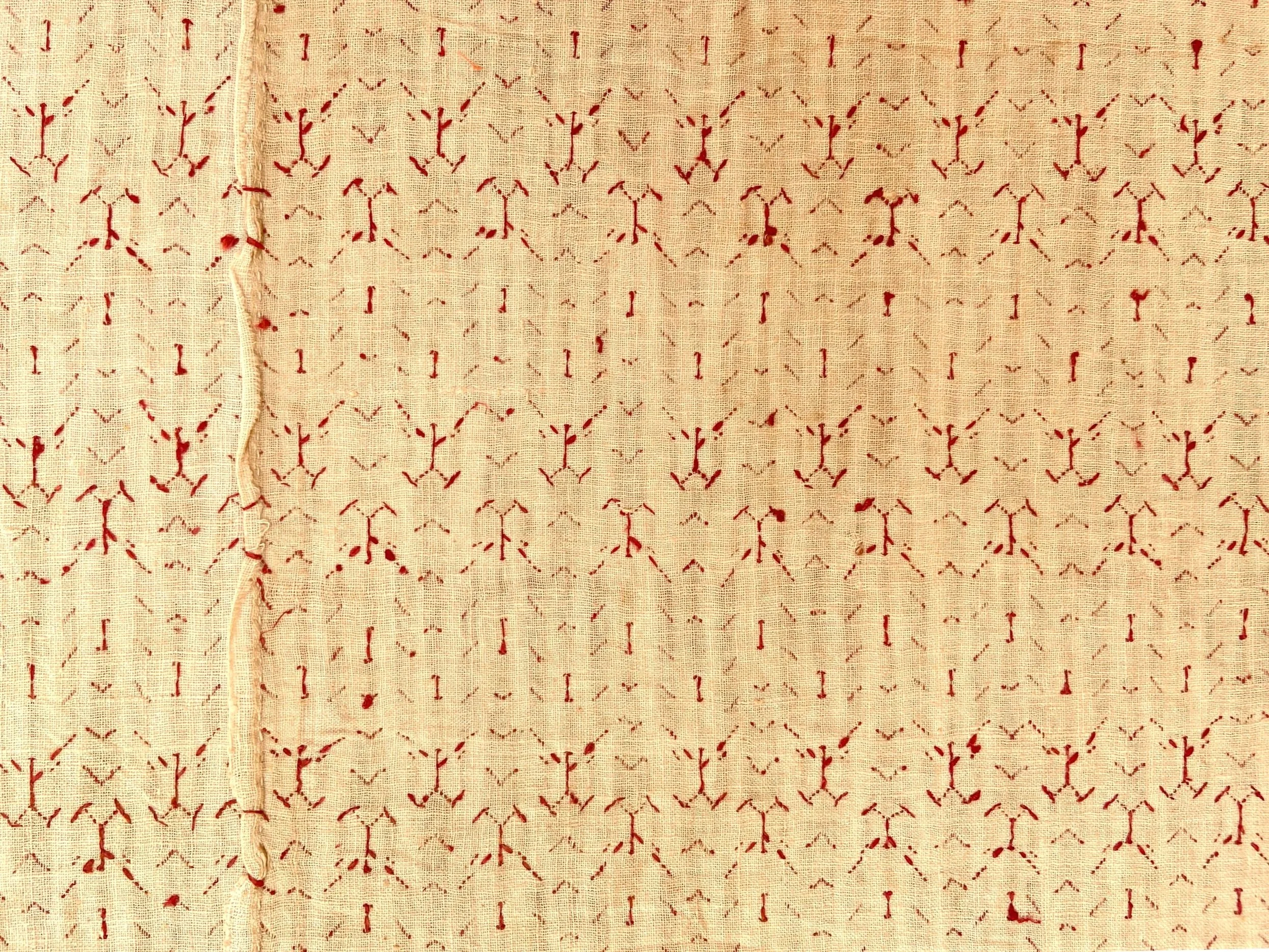
Fashioned from joined panels of khaddar—home-spun, hand-woven, vegetable-dyed cotton cloth made locally—the Phulkari ground fabric was embellished with untwisted soft silk floss embroidery.Artisans used a counted darning stitch worked entirely from the reverse of the cloth.For geometric patterns, stitches were not laid in a single direction; instead, horizontal and vertical stitches were combined, leaving long floats on the front that produced shimmering effects of reflected light and color.Narrative pieces used double running stitch, supplemented by a variety of other stitch styles.The labor involved in each textile is truly immense.
Phulkari (literally “flower-work”) range from bold geometric designs to charming folk narratives. In nearly every piece, artisans intentionally introduced small ‘mistakes’ as an expression of humility, believing that only God could create perfection.